
Appalachian State University's Research and Creative Activity at Appalachian (RECAPP) took place on Friday, September 19, and research from five Walker College of Business professors was included.
Title: From Safety to Sustainability: AI Drone Innovation in Boone’s Nursing Homes
Presenter: Dr. Charlie Chen, Computer Information Systems
Broader Impact: This study, currently at the conceptual stage, investigates the potential of AI-enabled drone technologies to advance both eldercare and sustainability in nursing homes. The research addresses two interrelated societal challenges: the increasing demand for quality eldercare and the imperative of building environmentally sustainable communities. The first focus is resident safety and caregiver support. AI drones can provide real-time monitoring, accelerate emergency responses, and reduce staff workload, thereby enhancing the quality of care while preserving residents’ dignity and independence. The second focus is environmental stewardship. Drones can monitor biodiversity, assess green space, and track carbon footprints, thereby enabling the production of accurate and transparent ESG reports. Although conceptual, this research idea highlights how a small-town initiative in Boone could serve as a replicable model for smart, sustainable eldercare nationwide.
Beyond Reality: An Examination of Virtual Influencers
Presenter: Dr. Pia Albinsson, Marketing & Supply Chain Management
Co-presenters: Dr. Brittany Beck, Marketing & Supply Chain Management; Dr. Stephen France, Marketing, Quantitative Analysis, and Business Law at Mississippi State University
Broader Impact: This project explores the rapidly growing world of virtual influencers (VIs), which are AI-generated characters that engage with audiences on social media platforms such as TikTok and Instagram. Through a systematic literature review and expert interviews with industry practitioners and academics, we examine how these digital personas are created, how they influence consumer behavior, and what ethical and strategic considerations they raise for brands. The goal of this research is to better understand the role of virtual influencers in marketing and society, especially as they become more human-like and emotionally engaging. Virtual influencers are not simply a marketing trend; They represent a shift in how brands communicate, how consumers form relationships with media figures, and how identity is constructed in the digital age. Our research highlights the need for thoughtful engagement and regulation as these AI-driven personas become more prevalent and persuasive. Virtual influencers impact consumers’ everyday experiences as many already follow or interact with virtual influencers, perhaps without realizing. Understanding how these digital personas are designed to influence us helps consumers make more informed decisions and encourages critical thinking about authenticity, trust, and the future of digital communication. It also raises important questions about ethics, transparency, and the psychological effects of AI in our social spaces.
CO₂ Labeling: An Assessment of Sustainability Literacy
Presenter: Dr. Pia Albinsson, Marketing & Supply Chain Management
Co-presenters: Dr. William Northington, Marketing & Supply Chain Management; Dr. Stephanie Lawson, Marketing & Supply Chain Management
Broader Impact: Though significant attention is often given to studying how climate action can be operationalized in the energy and transportation sector, we lack meaningful ways for consumers to reduce carbon emissions in the food sector, which is responsible for a significant amount of pollution. In addition, research suggests rising levels of anxiety, particularly in young people, about the impacts of climate change. One way to increase consumer literacy and understanding of individual food choices is through food labeling. Food eco-labels give consumers a way of comparing competing products on environmental characteristics and can be a third-party verification of the credibility claims made by the manufacturers and marketers. When guiding consumers to change attitudes and behaviors, the consumer needs to be aware of the issue at hand. Additionally, the consumer must believe that the issue matters both to society and to themselves on an individual level. This project aims to address both the issues of climate literacy and individual impact for choice through a carbon labeling project in collaboration with faculty and staff from the Walker College of Business, Campus Dining, and the Office of Sustainability.
About Faculty Research in the Walker College of Business
The Walker College faculty produce and disseminate extensive research through both academic and professional communities. In the last five years, faculty have published 543 peer reviewed academic journal articles, 160 conference proceedings, and made 533 conference and professional presentations. In total, faculty have produced 1,175 intellectual contributions in the last five years. Approximately 520 intellectual contributions were made in basic or discovery research, 540 in applied or integrative research, and 115 contributions in teaching and learning research. Learn more at business.appstate.edu/research.
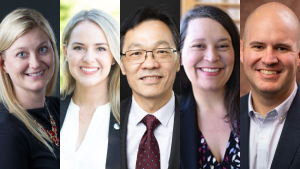
Pia Albinsson, Brittany Beck, Charlie Chen, Stephanie Lawson, William Northington
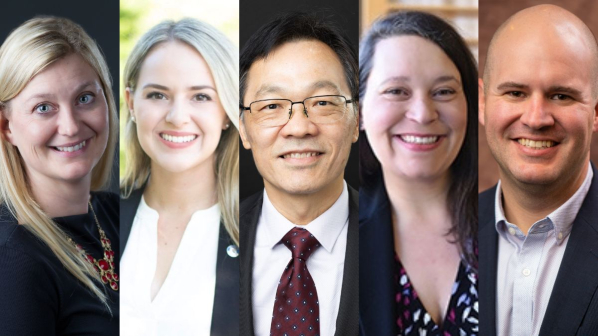
Recapp Collage